 Naa Songs
Scaling insulator production is not simply a matter of adding more machines. Manufacturers need to check whether materials, molding conditions, equipment capacity, quality control, and handling can support higher output. Larger targets can expose weak points that were less visible during smaller runs.
For teams planning expansion, a silicone rubber injection molding machine should be evaluated as part of the full production process rather than as a separate purchase. The right questions help manufacturers compare equipment and reduce changes after installation.
- What Production Volume Must the Line Handle?
The first question is about real production demand. Manufacturers should define expected output, product size, mold configuration, number of shifts, and operating hours per shift. These details affect machine capacity, cycle planning, labor needs, and floor space.
Insulator products vary in shape and size. Hollow core insulators, long rod insulators, surge arresters, cable accessories, and switchgear components may require different molds and production cycles Capacity planning should reflect the planned product mix rather than one output figure.
It is also useful to separate current demand from future demand. A machine selected only for present orders may limit later expansion. Equipment with capacity well above actual production demand may increase investment without improving production efficiency.
During this stage, a silicone rubber injection molding machine should be reviewed with mold change frequency, material preparation, curing time, and part removal. These factors can affect actual throughput.
- Can the Equipment Match the Required Materials?
Material compatibility is a key part of insulator production. Silicone rubber is widely used for electrical insulation products, while EPDM is also used in related applications. Manufacturers should confirm whether the equipment can process both materials.
Material behavior affects injection, filling, curing, and demolding. Settings that work for one compound may not suit another. Scale-up planning should include material trials and process review before higher volumes are expected.
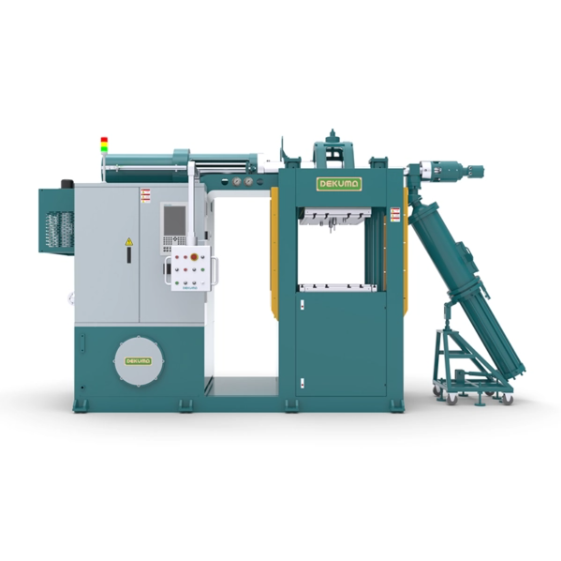
The RA Series Rubber Injection Molding Machine from Dekuma is designed for insulator-related production and is compatible with silicone rubber and Ethylene Propylene Diene Monomer, or EPDM. This is relevant when both materials are in the production scope.
Buyers should ask how material feeding, injection control, and process settings support repeatable molding for the selected compound and product. The answer should match the compound and product structure.
- How Will Product Quality Be Controlled During Expansion?
Higher output can make process variation more visible. Differences in material condition, mold temperature, injection behavior, or curing time can affect part consistency. Manufacturers should define which process parameters need checking before output increases.
Quality planning should also cover inspection after molding. Surface condition, dimensions, molding completeness, and product-specific requirements should be checked according to the component. The goal is to detect process drift before larger batches are affected.
Equipment stability matters because repeated production depends on controlled operation. The RA Series is designed for insulator manufacturing, with performance requirements evaluated against the intended application and production conditions.
A silicone rubber injection molding machine should therefore be judged by how well it supports repeatable process control, not only by rated capacity. Stable production data can make troubleshooting easier as output increases.
- Does the Machine Fit the Planned Product Range?
Scale-up may involve more than producing larger quantities of one item. Manufacturers may add new insulator formats, cable accessories, or switchgear-related parts as customer demand changes. Machine selection should reflect this wider product plan.
The RA Series can be used for hollow core insulators, long rod insulators, surge arresters, cable accessories, and switchgear. This range can suit manufacturers planning several related product categories.
The listed applications should be verified against each part’s mold dimensions, material requirements, cycle time, and handling needs.
Manufacturers comparing a silicone rubber injection molding machine should prepare a product list before discussing equipment. That list can help the supplier review configuration and identify where different tooling or settings may be needed.
- What Support Is Available for the Scale-Up Process?
Production expansion requires coordination between equipment, molds, materials, operators, and commissioning work. Manufacturers should ask what support is available before shipment, during installation, and after production starts.
Industry experience can help when the supplier understands common insulator applications and process questions that appear during project planning. Patents and certifications can also provide reference points during supplier review.
For insulator production, buyers should confirm the scope of installation, commissioning, operator training, and after-sales technical support before finalizing the project.
A silicone rubber injection molding machine should therefore be considered together with technical communication, commissioning support, and the supplier’s understanding of the target product. These factors can influence how a new production stage begins.
A Practical Way to Review Scale-Up Plans
Insulator production scale-up works more smoothly when manufacturers define output, materials, quality controls, product range, and technical support before equipment selection. These five questions create a practical framework for comparing proposals and identifying gaps before installation.
Before approving an expansion plan, manufacturers should verify that the selected equipment can meet the required output, product specifications, and quality criteria under the planned operating conditions. A structured review helps teams make equipment decisions that fit production conditions and future plans.